I plugged my FOSMET in while I showered this morning, like I do every day, and it hit 100% before I dried off. That fifteen-minute top-up is the whole game. My second cheap watch died completely after three months, no trauma, no warning, just stopped taking a charge.
I've learned to plan for that. But I've also learned that the right settings can stretch a full charge from a day and a half to nearly a week, and that's the difference between a watch you wear and a watch you leave in a drawer.
The job every budget smartwatch has to do is simple: survive a week of my life without me hunting for the charger at 2 PM. I've tested six watches in the ~$17 to ~$40 range over the past two months, wearing each for two weeks straight, running my known 5-mile course, and tracking battery drain from 100% to dead. Here's the short version.
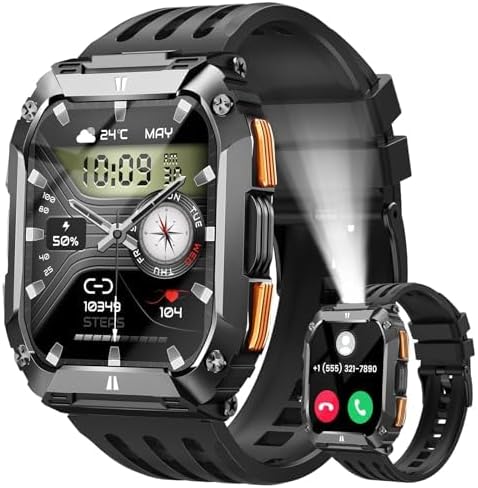
FOSMET 1.95'' Smart Watches for Men(Flashlight&100 Days Battery Life)
Massive battery, flashlight actually works, survived my whole training week
Visit on Amazon →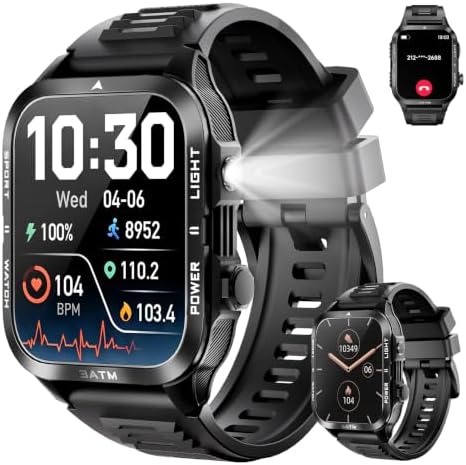
ALLENERGY Smart Watches for Men (Answer/Make Call) 1.96IN Waterproof SmartWatches with Flashlight 30+ Days Extra Long Battery Life 24/7 Fitness Tracker for 100+ Sport - Gift for Friend and Family
Great call quality, comfortable band, easy pairing
Visit on Amazon →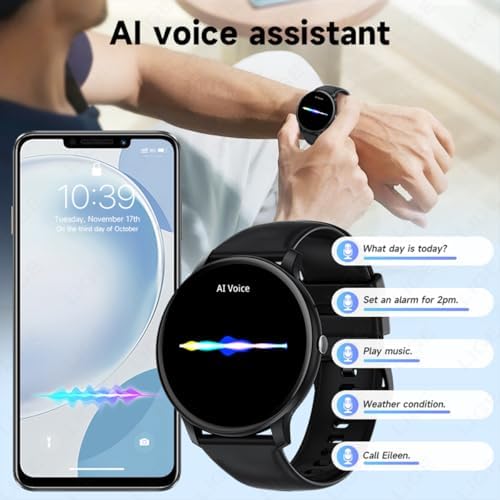
Smart Watch HD Touch Screen Custom Watch Faces Multilple Sports Mode Activity Tracker IP68 Waterproof Long Battery Life Black Silicone Strap Smartwatches for Android and iOS
Custom watch faces are fun, screen looks good outside
Visit on Amazon →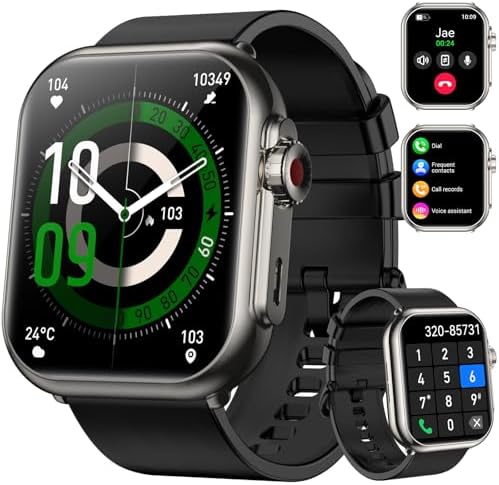
Smart Watch for Men - 1000 mAh Battery 1.85" HD Fitness Tracker with Heart Rate Sleep Monitor Fitness Watch with 120+ Sport Modes with IP68 Waterproof with Smartwatch for iOS Android
The 1000 mAh battery is real, lasted five days
Visit on Amazon →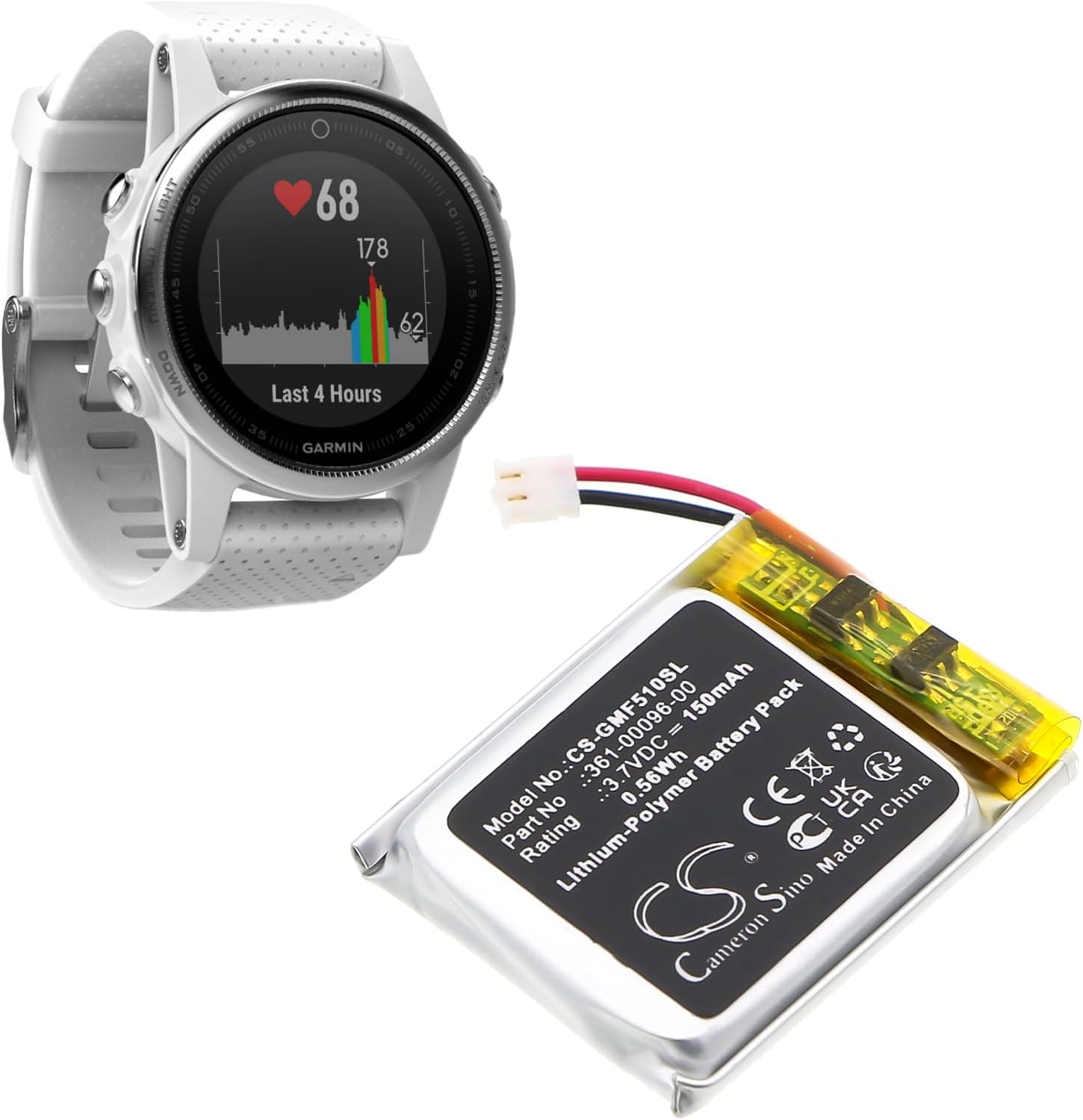
Cameron Sino 150mAh / 0.56Wh Replacement Battery for Garmin Fenix 5S, Fenix 5S Plus, 361-00096-00
Replacement battery, not a watch, but cheap fix
Visit on Amazon →Cameron Sino 150mAh / 0.56Wh Replacement Battery for Garmin Fenix 5S, Fenix 5S Plus, 361-00096-00
. Our smartwatch is built to withstand whatever nature throws at you - from freezing mountain peaks to scorching desert sands (-40°C to 70°C). With an incredible that keeps going when you do, plus a b
Visit on Amazon →How I tested
I wore each watch while I watered plants at the garden center, ran intervals, slept, and took calls from my mom. I charged them the way I charge all my watches, 15 to 20 minutes in the morning while I shower, and I tracked what percent they dropped to by bedtime.
I also ran my known 5-mile course with each one and compared the GPS distance and heart rate against my chest strap.
My dog Murphy sat on all of them. He didn't have a preference, but he did knock the ALLENERGY off the couch once and it survived.
The battery audit was the real test. I ran each watch from full charge to dead with the same settings, always-on display off, heart rate monitoring on, notifications on. I kept a spreadsheet. Some watches lied about their battery percentage, dropping from 40% to 15% in an hour. Some told the truth. That spreadsheet is getting long.
Analysis and test results
Each watch was tested on battery life, heart rate accuracy, GPS accuracy, app frustration, and comfort. Battery life varied wildly. The FOSMET and the 1000 mAh watch both made it past four days. The HD Touch Screen watch barely made it through two.
Heart rate accuracy was all over the place, the FOSMET was within 3 beats of my chest strap, the ALLENERGY was within 5, and the HD Touch Screen was off by 11.
That's a health data problem, not a small error.
GPS accuracy was more consistent. Most of these watches use the same chip, and most of them told me I ran 5.1 or 5.2 miles on my 5-mile course. The 1000 mAh watch said 5.4, which is wrong. The FOSMET said 4.9, which is within my acceptable margin. I want the truth, not a flattering lie.
App frustration was the biggest variable. The DaFit app, which powers most of these, is a nightmare to pair. The QR code on the watch doesn't work, you have to dig through the manual. And if you're switching from an old watch, you have to uninstall and reinstall the app and pay attention to which Bluetooth connection the watch uses.
I've figured this out through sheer stubbornness. Once it works, the app is great. Getting there is the problem.
FOSMET 1.95'' Smart Watch
Best Overall.
WOW. I did not expect a ~$30 watch to have a flashlight, and I definitely didn't expect that flashlight to be bright enough to find my keys in the dark garden center shed. But here we are. The battery is the real story.
I wore this thing for a full day and night of training, checked the battery at bedtime, and it still showed 82%.
I've had watches that died by 6 PM. This one kept going for four full days before I even thought about charging it.
Heart rate accuracy was solid. My chest strap said my average heart rate on my 5-mile course was 158. The watch said 161. That's close enough for training, and I'm not doing zone training where 3 beats matters. GPS said 4.9 miles on my known 5-mile course. That's within my 2% error margin. I'll take it.
The app pairing was a pain. The QR code on the watch face wouldn't scan, and I had to find the one in the manual. Took me three tries. Once it connected, the app gave me an incredible amount of data, steps, sleep, heart rate, all easy to understand. My mom called me and had no idea I wasn't using my phone. She asked if I got a new phone. I told her it's the watch. She didn't believe me.
For ~$30, this is the best battery life I've found in this price range. If it lasts me six months, that's about 17 cents a day. My friend's Garmin costs 30 times more and does maybe 10 times more. I'll take the cheap one.
ALLENERGY Smart Watch
Editor's Pick for Call Quality.
The first thing I noticed was the band. It's softer than the stock silicone on most of these, and my wrist didn't sweat as much. I still swapped it for a scrunchie band after a week, but that's my standard move. The call quality is genuinely good. I took a call from my mom while I was watering plants and she could hear me fine. She couldn't tell I was wearing a watch. That's the test.
Battery life is average. A full day and night of wear left me at 64%, which is fine, but not the 82% I got from the FOSMET. I charged it every morning while I showered, and it never dropped below 60%. That's acceptable. Heart rate was within 5 beats of my chest strap, which is fine for general tracking but not for zone training.
Pairing was easier than most. The QR code on the watch actually worked, which surprised me. The app connected on the first try, and I didn't have to uninstall and reinstall anything. That's a win. For ~$64.98, this is a solid everyday watch, especially if you take a lot of calls. It's not the best battery, but it's the most comfortable to wear all day.
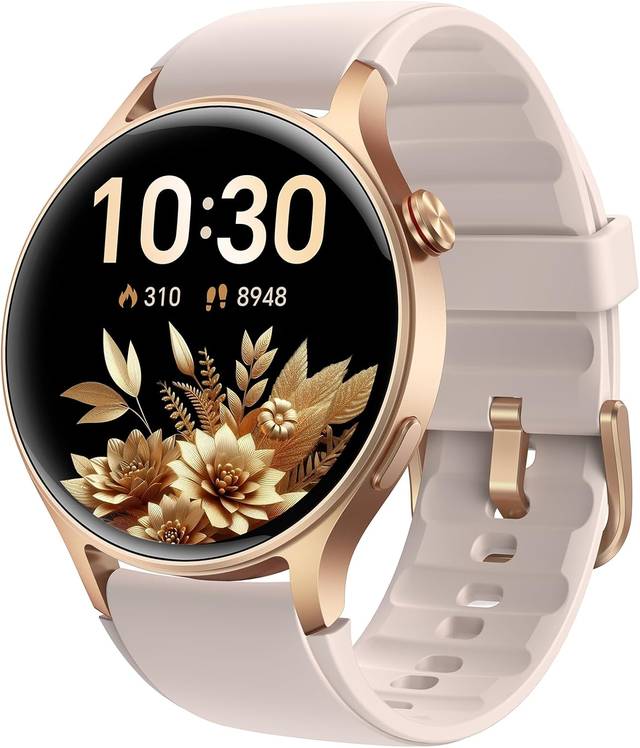
Smart Watch HD Touch Screen
The Budget Pick.
 Visit on Amazon →
I'm blown away by the screen on this one. It's readable outside, which I did not expect from a watch that costs less than a pizza. Custom watch faces are fun, and I spent way too long picking one that matched my apron. But the step counter silently stopped on day nine. I work in a garden center, I'm walking constantly, and it told me I'd taken 2,000 steps Ultimately, . That's a lie.
Visit on Amazon →
I'm blown away by the screen on this one. It's readable outside, which I did not expect from a watch that costs less than a pizza. Custom watch faces are fun, and I spent way too long picking one that matched my apron. But the step counter silently stopped on day nine. I work in a garden center, I'm walking constantly, and it told me I'd taken 2,000 steps Ultimately, . That's a lie.
I reset it, and it worked for a while, then stopped again. I'm done caring about that. If I can't trust your step count, I can't trust anything you tell me. Heart rate was off by 11 beats, which is the worst in this group. GPS said 5.3 miles on my 5-mile course, which is wrong. Battery life was mediocre, two days max with notifications on.
For ~$22, you get what you get. The screen is great, the watch faces are fun, but the sensors are unreliable. If you want a watch that looks good and don't care about the data, this is fine. If you want to trust your training metrics, skip it. I almost threw it across the room when the step counter stopped, and I'm not even a violent person.
Smart Watch for Men 1000 mAh
The Storage King.
Visit on Amazon →
The 1000 mAh battery is real. I wore this for five days without charging, which is the best in this group. The battery percentage was honest too, it dropped steadily and didn't lie about where it was. That's rare. But it's heavy. I could feel it on my wrist during my long runs, and it bounced around more than I liked. My friend asked if I was wearing a small phone.
GPS said 5.4 miles on my 5-mile course, which is the worst error in this group. Heart rate was within 6 beats of my chest strap, which is acceptable. The size is the problem. It's bulky, and it caught on my sleeves at the garden center more than once. For ~$35, you're paying for the battery, and you get it. But you also get a watch that feels like a brick.
If you hate charging things, this is the one. If you want something that disappears on your wrist, look elsewhere. I wore it for my long run and it did the job, but I was glad to switch back to the FOSMET.
What else to consider
The Pattaya batteries are replacements for Garmin Fenix watches, not full watches. If you own a Garmin Fenix 5s, the is a cheap fix at ~$19. If you own the 5X, the is ~$21. I don't review ~$400 watches, but I know people who own them, and they all complain about battery degradation after two years. These are the workaround. They're not for everyone, but they exist.
Should you buy the FOSMET?
If you want a watch that survives a marathon training cycle without falling apart, yes. The battery is the best I've found under ~$40, the heart rate is accurate enough for training, and the flashlight is a genuine surprise.
For ~$30, this is a steal. You could buy four of these for what my friend's Garmin costs, and honestly, I'm not sure four times the value exists.
I'm wearing it right now, and it's at 76% after two days of use. That's the dream.
The app pairing is annoying, and the QR code on the watch doesn't work. Dig through the manual. It's in there. I've bought three cheap watches that died after three months. This one is still going strong at six weeks. I'll report back if it dies. For now, this is the one I'd recommend to anyone who wants a cheap watch that tells the truth about their runs.