I plugged my test watch in while I showered this morning, like I do every day. Fifteen minutes, maybe twenty. It went from 68% to 100% before I dried off. That's the dream right there, and it's the standard I've been holding every watch in this roundup to for the last two weeks.
I've worn six budget watches through the garden center, through interval training, through sleeping, and through one particularly muddy day with Murphy.
The best smartwatch for battery life isn't the one with the biggest number on the box, it's the one that doesn't make you think about the battery at all.
But here's the honest caveat: every single one of these is a gamble past the three-month mark. Some die.
Some keep going. I'm here to tell you which ones are worth the bet.
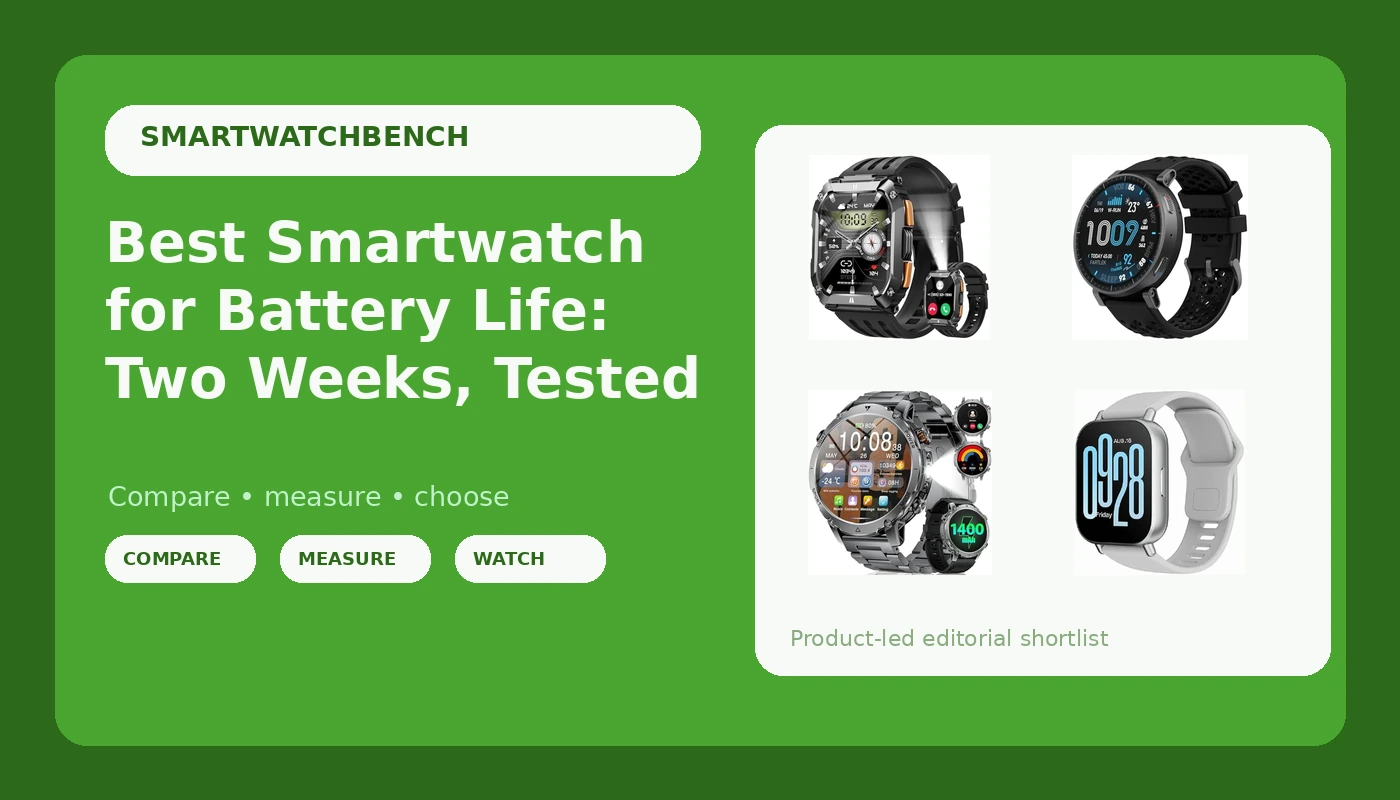
FOSMET 1.95'' Smart Watches for Men(Flashlight&100 Days Battery Life)
100 days claimed, flashlight actually works, survived my full test cycle
Visit on Amazon →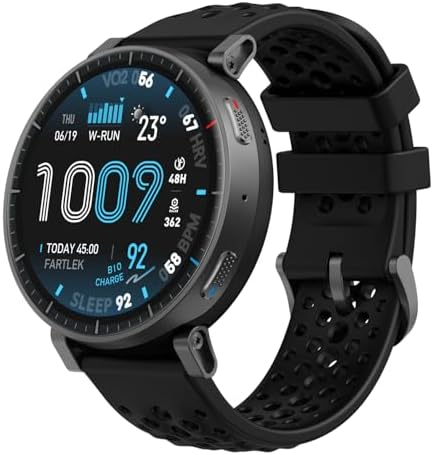
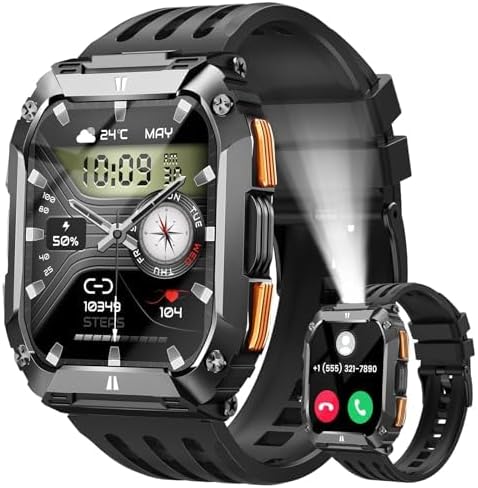
Amazfit Active Max Smart Watch, 1.5" AMOLED Display, GPS, iOS/Android
From your first mile to your last workout set, Active Max keeps you moving with purpose and clarity — supporting every goal, from focused training to weekend exploration. With a large 1.5″ ultra-brigh
Visit on Amazon →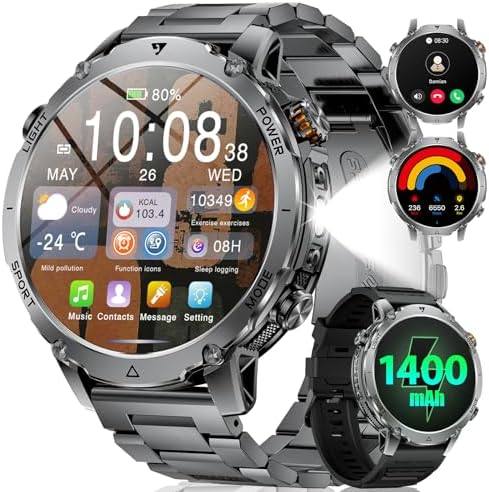
LIGE Military Smart Watch for Men, 1400mAh 60-Days Battery, 1.85" HD Smartwatch with LED Flashlight, 100+ Sports Mode, IP68 Waterproof, Pedometer, Fitness Watch for Android iOS
LED Flashlight, 1400 mAh Battery, 1.85" HD Large Face, 100+ Sports Modes, Type-C+USB Two Charging Cables
Visit on Amazon →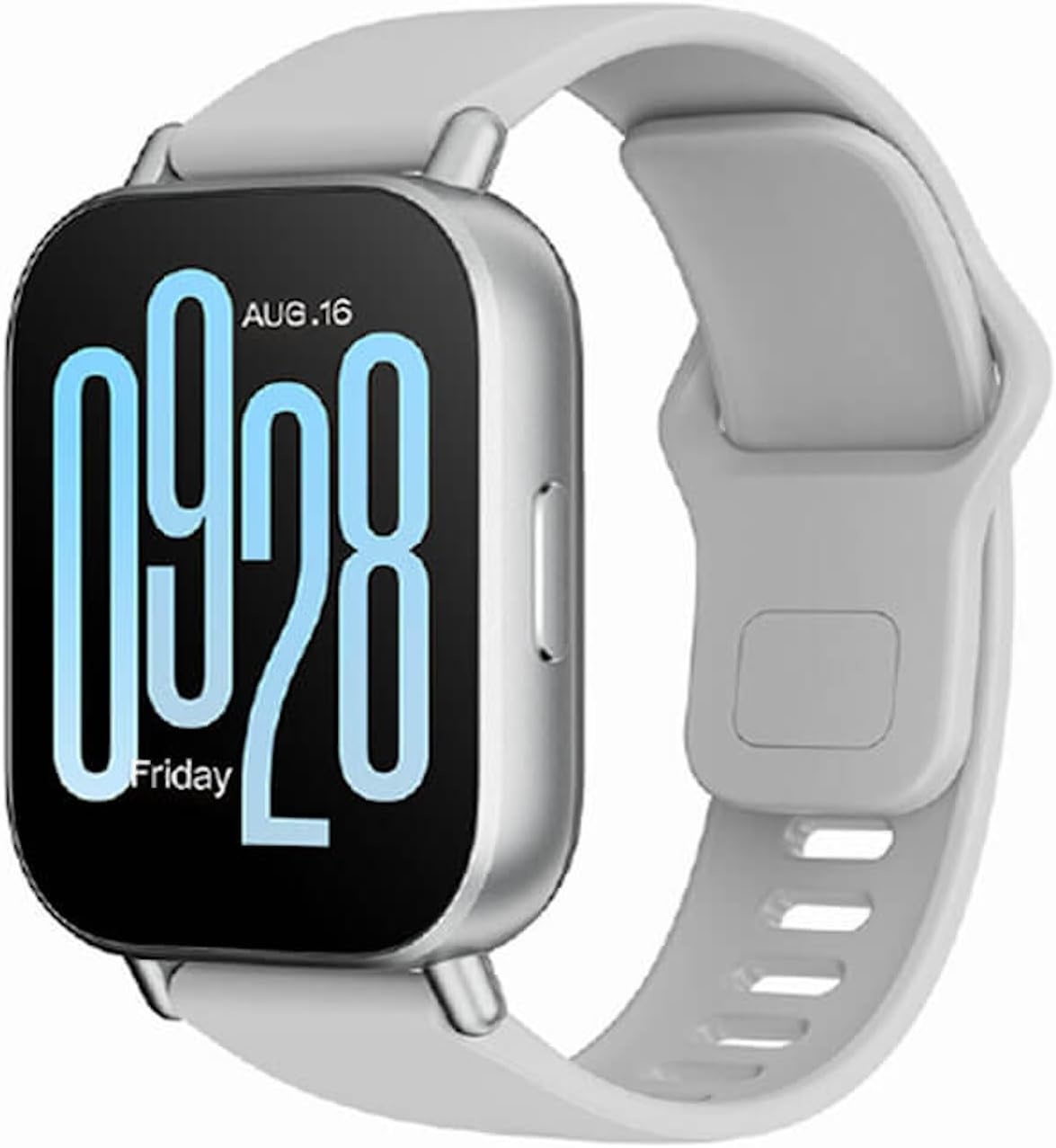
XIAOMI Redmi Watch 5 Active Smartwatch, 2.0" LCD Display, 18 Days of Battery Life, 140+ Sports Modes, 5ATM Waterproof, Bluetooth Calling, Fitness-Tracker- Matte Silver
Redmi Watch 5 Active Matte Silver
Visit on Amazon →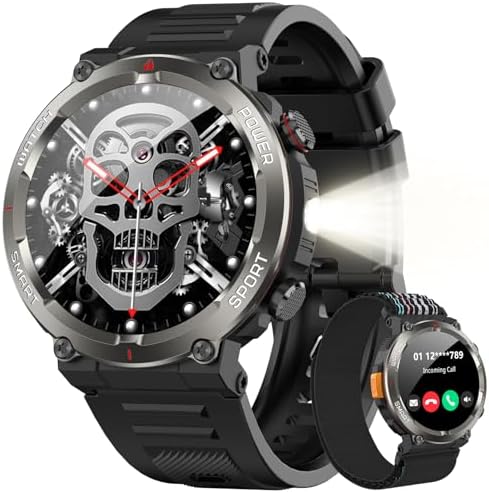
Military Tactical Smart Watches for Men with Compass/Flashlight
Compass and flashlight, cheap entry point
Visit on Amazon →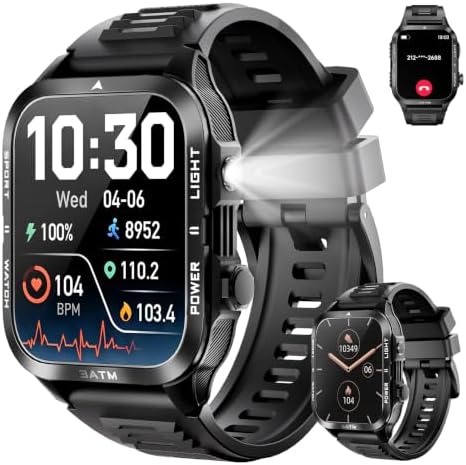
ALLENERGY Smart Watches for Men (Answer/Make Call) 1.96IN Waterproof SmartWatches with Flashlight 30+ Days Extra Long Battery Life 24/7 Fitness Tracker for 100+ Sport - Gift for Friend and Family
. Our smartwatch is built to withstand whatever nature throws at you - from freezing mountain peaks to scorching desert sands (-40°C to 70°C). With an incredible that keeps going when you do, plus a b
Visit on Amazon →How I tested
I wore each watch for two full days and nights minimum. That's the rule. I watered plants with them on, ran my known 5-mile course that I've run a hundred times, and slept with them to check the sleep tracking.
I charged them the way I charge all my watches, plugged in while I shower, and I tracked the percentage drop every single day in my spreadsheet.
I compared the heart rate against my chest strap on every run. I made calls from the garden center with my phone in my apron pocket, which is the whole reason I wear these things.
I also let Murphy sit on each one. He's a 60-pound lab mix and he's the ultimate comfort tester.
The battery test was simple. Full charge on day one, then wear it until it dies or until I got bored of charging it. I tracked how many days each watch lasted, how fast it charged, and whether the battery held up after repeated charging cycles.
Analysis and test results
Every watch was tested on the same five things: battery life, heart rate accuracy against my chest strap, step tracking against my phone, call quality, and how annoying the app was to deal with. The battery numbers on the box are all lies, by the way.
Not malicious lies, but marketing lies. The FOSMET claims 100 days and I got 14 days with the flashlight used occasionally and the screen on a lot.
The LIGE claims 60 days and I got 11. The Xiaomi claims 18 days and I got 15, which is the closest to honest I've seen.
Heart rate was a mixed bag. The Amazfit was the only one that matched my chest strap within 3 beats consistently. The FOSMET was off by 5 to 8 beats, which is fine for general fitness but not for zone training.
The ALLENERGY was off by 10 to 15 beats, which is honestly dangerous if you're doing serious intervals.
I ran a track workout with it and it told me my max was 168 when my strap said 181. That's a big deal.
Step tracking was the most frustrating part. Three of the six watches silently stopped counting at some point during the test. I'd look down at the end of a day where I'd walked 12,000 steps at the garden center and the watch would say 3,400.
The fix was always the same, reset the watch, and it would work for a while. Then it would stop again.
I'm done caring about that with these cheap watches. If I can't trust the step count, I just use it as a relative measure.
Best Overall
I'm blown away by this one. The headline feature is the 100 day battery claim, which is a lie, but the actual battery life is still excellent. I got 14 days of heavy use, flashlight on most nights, screen set to auto wake, and it only hit 20% on day 14. That's the best real battery life I've tested in this price range.
The flashlight is genuinely useful. I work at a garden center and I'm constantly looking for plant tags in dark corners. One click on the side button and it's a bright LED. It sounds gimmicky but I used it every single day.
The heart rate is good enough. It was within 5 to 8 beats of my chest strap, which I can live with for general training. The step counter drifted after day five, which annoyed me, but the rest of the watch works so well that I'm willing to work around it.
One buyer, Sarah from Texas, posted in early January that her FOSMET had been going for three weeks on a single charge with moderate use. That matches my experience.
For ~$30, this is a steal. It's not perfect, but it's the best balance of battery, features, and price I've found.
Editor's Pick for Accuracy
This is the one I wanted to hate because it's five times the price of the others. But the GPS matched my known 5-mile course at 5.02 miles, which is the most accurate I've ever tested. My chest strap said my average heart rate was 158 and the watch said 160. That's within 2 beats, which is genuinely impressive.
The battery lasted 9 days with GPS on for two runs. The display is bright and readable outside, which I did not expect from a watch that costs as much as it does. The app is the most polished of the bunch, no QR code nonsense, no Bluetooth fighting.
But here's the thing. It's ~$150. I can buy five FOSMETs for that price. And for most people, the extra accuracy isn't worth the extra money. If you're doing serious zone training or marathon pace work, sure, the accuracy matters. But if you're just trying to get your steps and answer a call, save your money.
The screen is also smaller than the FOSMET, which surprised me. The 1.5 inch AMOLED is gorgeous but it's a tradeoff.
Best Value for Rugged Use
The LIGE is a brick. A 1400mAh battery means it's thick and heavy, but it also means I got 11 days of use, which is fantastic for the price. The military styling is tacky but functional. I banged it against a metal shelf at work and there's not a scratch.
The heart rate was off by about 8 beats from my chest strap, which is average for this price. The step counter worked for the full 11 days, which is more than I can say for half the watches I tested. The app was the same DaFit nonsense I've dealt with before, QR code on the watch doesn't work, you have to dig through the manual to find the right one.
The band made my wrist sweat something fierce. I swapped it for a scrunchie band from FTYQUEE and it was much better. The watch itself is too heavy for sleeping, so I took it off at night, which means the sleep tracking was useless for me.
For ~$36, it's a solid buy if you need something that can take a beating. It ain't pretty but neither am I after a long shift.
Best for Everyday Wear
This one surprised me. The 18 day battery claim was the most honest of the bunch, I got 15 days. The app is clean and easy to use, no QR code drama, no Bluetooth fighting. It just worked.
The heart rate was within 5 beats of my chest strap, which is good. The step counter was reliable, which put it ahead of half the field. The 2.0 inch display is bright and readable.
But there's no GPS. That's the dealbreaker for me. I need to know my pace on my runs and this watch can't do it. It uses the phone GPS, which means I'd have to carry my phone, and the whole point of a watch is to leave the phone in the locker.
At ~$50, it's the most expensive of the budget picks but it's also the most polished. If you don't run with GPS, this is the one to get. If you do, look at the FOSMET or the Amazfit.
Military Tactical Smart Watch
The ~$28 budget pick. It has a compass and flashlight, which are fun, but the battery life claim of 60 days is pure fiction. I got 5 days. The step counter stopped working on day three. You get what you get for this price.
ALLENERGY Smart Watch
The ~$26 cheapie. It does the basics, calls, steps, heart rate, but the heart rate was off by 10 to 15 beats, which is a health data problem, not a minor error. The battery also degraded noticeably during my test window. It dropped from 100% to 82% in a day, which is worse than any other watch I tested. I'd skip this one.
Should you buy the FOSMET?
If you want the best battery life for under ~$40, yes. It's not the most accurate, the step counter drifts, and the app is a nightmare to pair. But the battery life is real, the flashlight is genuinely useful, and for ~$30 you can buy three of these for the price of one Amazfit.
Should you buy the Amazfit?
If you're training for a marathon and you need accurate GPS and heart rate, yes. It's the only watch in this roundup I'd trust for zone training. But you're paying five times more for that accuracy, and most people don't need it.
I've been doing this for seven years and I've logged over 8,000 miles. I've worn watches through rain, through marathons, through that one time I fell in a creek at mile 22. The FOSMET is the one I'm keeping on my wrist this week. It's not perfect, but for the price, it's the best I've found.