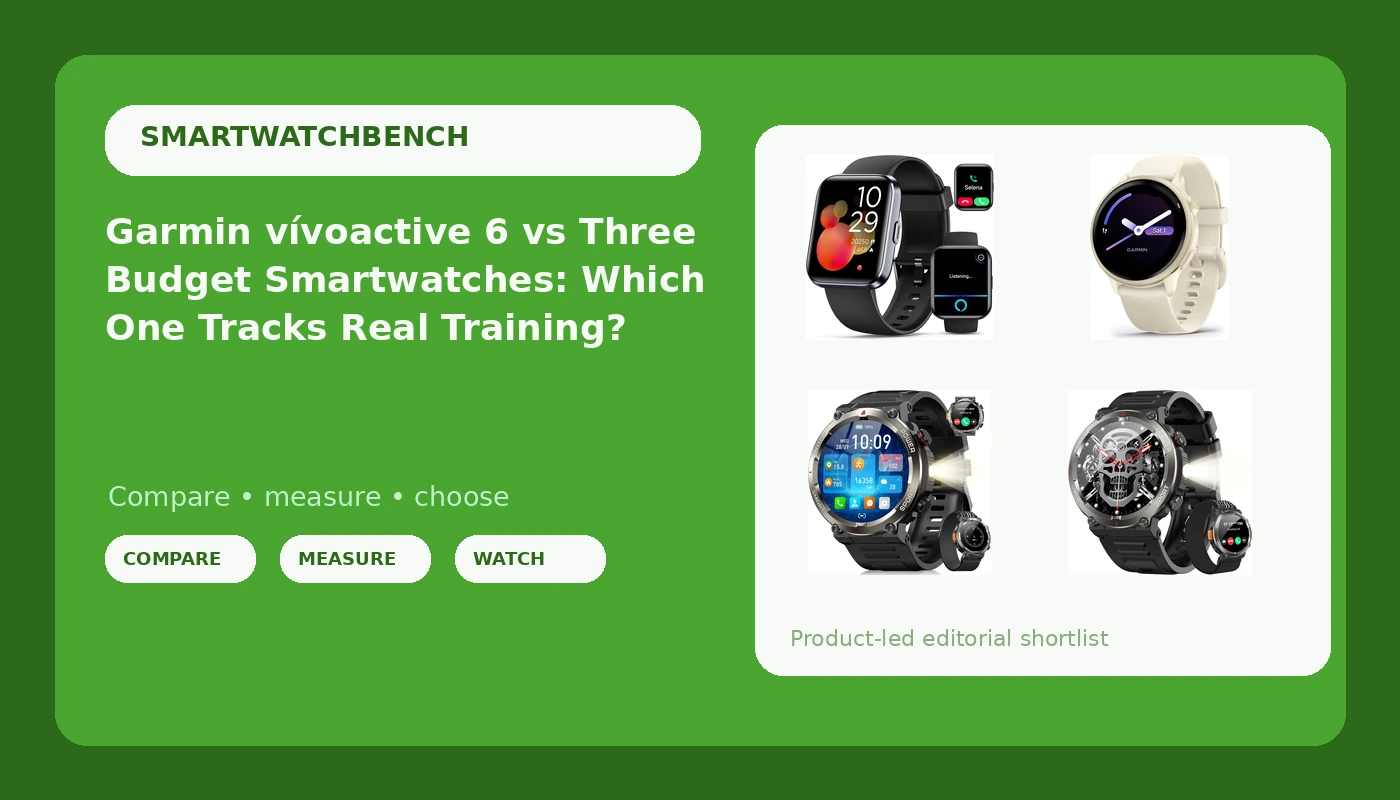
I have worn a watch on every run, ride, and race since 2019, which is somewhere north of 8,000 logged miles of watching numbers either match reality or quietly drift away from it. This fitness smartwatch comparison started as a note to myself about a search results page: a Garmin vívoactive 6 sitting at the top of the price range next to three budget watches that all promise military durability, month-long battery life, and health tracking that reads identically on paper. They are not the same product wearing different badges. They are four different answers to the question of what a watch is actually for, and picking the wrong one will annoy you every single day you wear it.
The short version: the Garmin vívoactive 6 is the only watch in this group I would build a training block around. The other three are narrow-purpose devices, and they are only disappointing if you buy them expecting Garmin-grade location data.
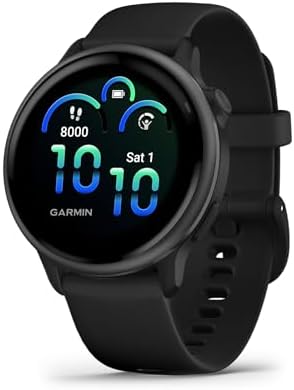
Garmin vívoactive 6, Health & Fitness GPS Smartwatch, 42mm, Bone
Built-in GPS and a training ecosystem I would actually use, in a 42mm case that suits smaller wrists
The most expensive watch here by a wide margin, and not a ruggedized outdoor tool
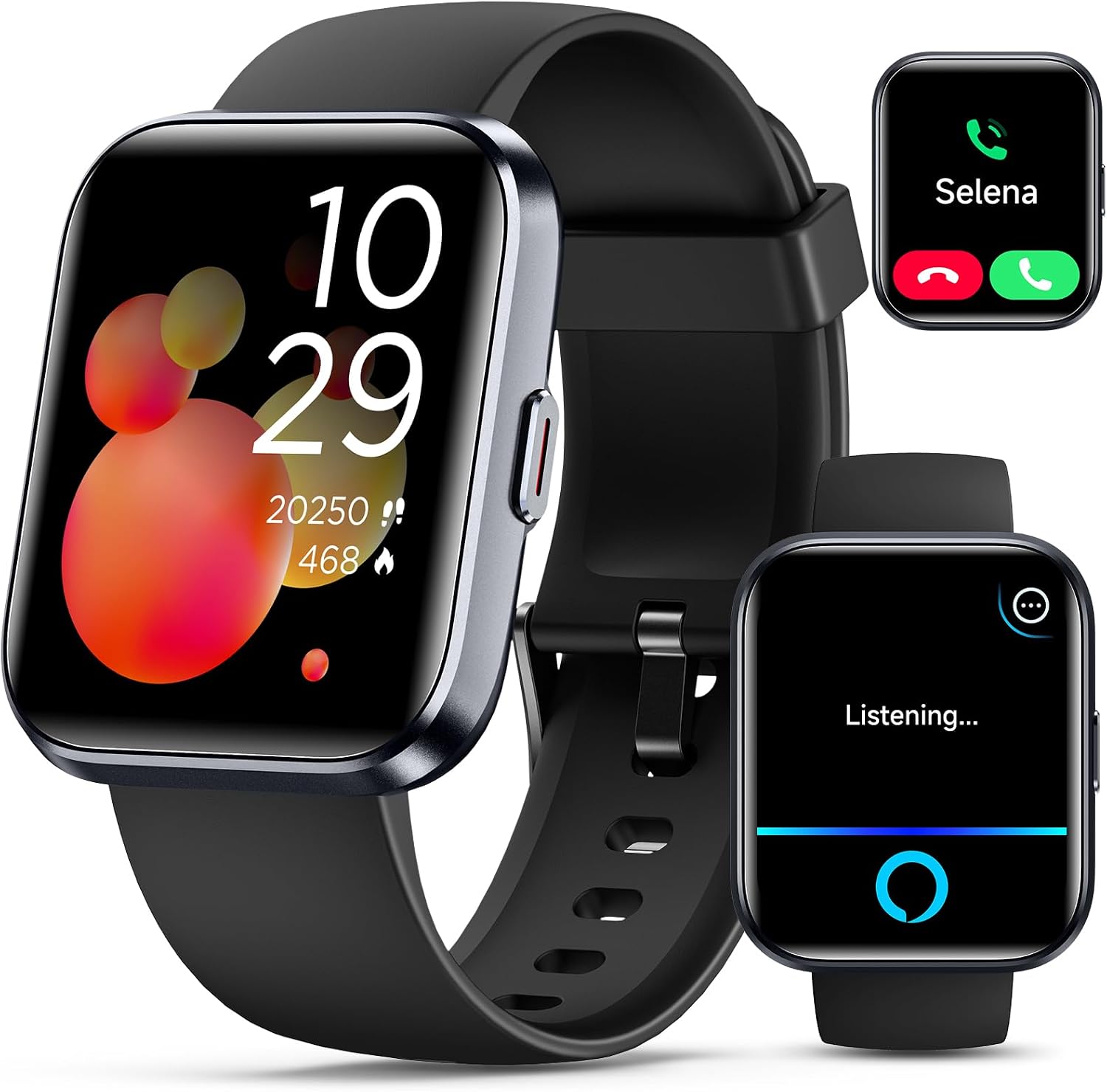
Smartwatch for Women/Men, 1.8'' Fitness Tracker Watch with Alexa, Call & Notification Alerts, Heart Rate & Sleep Monitor, 120 Sports Modes, Waterproof
Big readable screen, Alexa on the wrist, works with Android and iPhone
No GPS in the spec, so outdoor distance depends on your phone
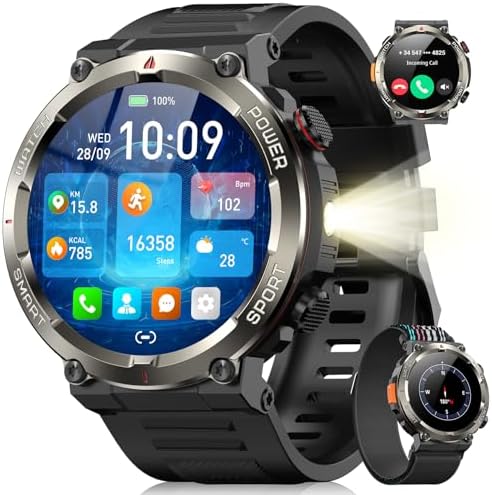
Military Smart Watch for Men (Answer/Make Calls), 100 Days Battery, Flashlight, Compass, Heart Rate, SpO2, Sleep Monitor, 2 Straps
Battery endurance as the headline feature, plus a flashlight and compass the Garmin here does not have
Battery claims are measured at light use, and wrist sensors lag a chest strap
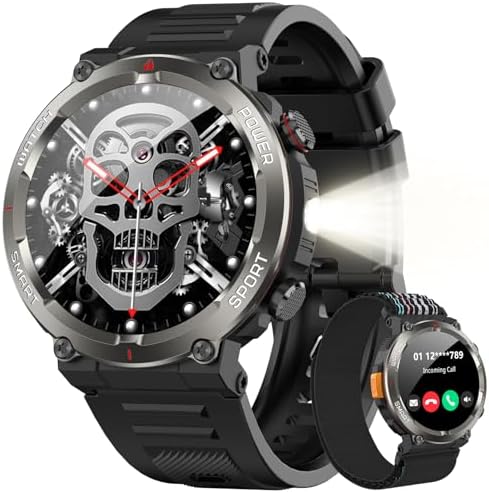
Military Tactical Smart Watches for Men with Compass/Flashlight
The cheapest way into the category, and the styling is the point
Compass and flashlight do not make a training watch
Prices and availability were captured from Amazon Creators API and may change.
How I judge a watch that claims to track training
Four questions, asked in this order. Does the GPS trace match a course I know? Does the heart rate match a chest strap during intervals, not just during an easy walk? Does the battery survive a real week with GPS and notifications on, rather than the "light use" scenario in the marketing copy? And does the software still work after the first firmware update, because a great sensor behind buggy software is a sensor you cannot use.
Everything below is filtered through those questions. I am also going to be explicit about which answers come from a product's own specification list and which come from my own runs, because those are two very different kinds of evidence and mixing them is how buying guides end up lying to you.
The Garmin vívoactive 6: the one built around location
The vívoactive 6 is a 42mm health and fitness GPS smartwatch in the Bone colorway, and the important word in that sentence is GPS. Garmin builds the vívoactive line for people who want the health and training side of the Garmin ecosystem without stepping up to the Forerunner or Fenix families. When I say GPS accuracy is the whole game for runners, this is the family of watches I mean. Location data here is the foundation of the product, not a feature bolted on at the end of a spec list.
The 42mm case size matters more than people expect. A watch that overhangs your wrist catches on sleeves and shifts during runs, and wrist-based heart rate gets worse when the optical sensor cannot sit flat against skin. A 42mm case with a neutral Bone finish is the version of this watch that works as a daily wearer and as a training tool, which is a harder combination than it sounds. The vívoactive line also inherits Garmin's software platform, which is where most of the value sits: the training and recovery metrics live in the app, and they are only as good as the data going in.
Two honest caveats. First, it is the most expensive watch in this comparison, and if you never run or ride outdoors, you are paying for a sensor you will not use. Second, it is not a ruggedized tactical watch. There is no flashlight in the name, no compass in the name, and the case is designed for daily wear rather than rock scraping. If your priority is surviving a job site, that is a different product.
I do not quote battery figures from a spec sheet. Garmin publishes its own numbers, and my rule is that a battery claim gets repeated only after I have audited it at real use with GPS and notifications on. Until then, it is a claim.
The 1.8-inch Alexa watch: the notification and wellness pick
Read the full name of this one and you get an accurate description of what it is: a fitness tracker watch with a 1.8-inch display, Alexa built in, call and notification alerts, heart rate and sleep monitoring, 120 sports modes, and a waterproof build, compatible with both Android and iPhone. That is a lot of features for the money, and it is worth being precise about which of them are load-bearing.
Alexa on the wrist is genuinely useful. Timers, reminders, quick questions while your hands are full. Call and notification alerts on a 1.8-inch screen are the reason most people buy a smartwatch in the first place, and a bigger display is easier to read at a glance mid-run than a small one. Heart rate and sleep monitoring give you context about your week, which is real value even if it is not training-grade data.
Now the trade-offs. There is no GPS anywhere in that feature list. Outdoor distance is going to come from a connected phone or from an estimate, and an estimate is not a measurement. The 120 sports modes are a menu, not coaching, and the quality of any mode depends entirely on the sensors underneath it. Budget wrist heart rate is a convenience sensor: it is fine at rest and during steady efforts, and it is the first thing to fall apart when you start doing intervals. If your training decisions depend on heart rate zones, this is not the watch that should be making them.
What it is: an excellent notification device with wellness tracking attached, at a fraction of the Garmin's cost. What it is not: a replacement for a GPS watch.
The 100-day battery military watch: endurance as the headline spec
This one leads with a number: 100 days of battery. Alongside that claim you get answer and make calls, a flashlight, a compass, heart rate, SpO2, sleep monitoring, two straps in the box, and a rugged case that works with iPhone and Android phones.
My rule on battery claims is simple and unpopular: they are measured at light use. Turn off the always-on display, skip notifications, avoid workout tracking, and any watch will last dramatically longer than it does in your life. Real use with notifications enabled, heart rate running, and any workout tracking at all will land well below the headline number. That does not make the claim a lie. It makes it a best case.
That said, this category of watch usually does beat a full smartwatch on standby endurance, sometimes by a lot, and that is a legitimate reason to buy one. The flashlight is the feature I would miss most if I moved to a smoother lifestyle watch, and a compass is a real tool outdoors, not a gimmick. Two straps is a thoughtful inclusion: one for training, one for daily wear, which is more than most watches at this price bother to provide.
The trade-offs are weight and sensor honesty. Rugged cases are heavy on the wrist, which is noticeable over a long run. SpO2 and sleep numbers from budget hardware are directional at best, useful for spotting trends and useless for diagnosis. And wrist heart rate in this tier is not going to match a chest strap during hard efforts, so do not build interval sessions around it.
The tactical compass watch: the cheapest way into the category
The tactical watch is the least complicated product here, and its spec list says so: military tactical styling with a compass and a flashlight. No GPS claim, no battery marathon in the name, no pretence of being a training tool.
Judged on those terms, it does its job. If you want the rugged look, a compass, and a flashlight on your wrist, and you are not trying to train with the data, this is the lowest-cost way to get there. It is the watch I would hand to someone who wants a tough-looking daily wearer and has no interest in pace, distance, or heart rate zones.
What it is not is a replacement for a GPS watch, and the marketing around tactical watches sometimes implies otherwise. A compass tells you which way is north. It does not tell you how far you ran, how fast, or whether your effort matched the plan. Those are different jobs, and only one of them is solved by a magnetic needle.
What the spec sheets leave out
Five things that decide whether you actually like a watch, and none of them appear in a product title.
Waterproof is a word with a rating behind it. A watch described as waterproof for swimming and a watch described as waterproof for splashes can carry very different ratings, so check the number rather than the adjective before you take anything into open water.
Display technology changes everything about battery life. A brighter, larger screen costs endurance, which is exactly why the budget watches with big displays and the rugged watches with long battery claims are solving opposite problems.
App quality is the difference between data and noise. A watch is a sensor plus software, and the software is what you look at every morning. Two watches with identical sensor specs can feel completely different after a month.
Sensor placement beats sensor branding. Wrist-based heart rate struggles with intervals, cold hands, and loose straps regardless of price. If a number matters to your training, a chest strap is still the reference, and I will keep saying that until the technology proves otherwise.
Updates can break things. A watch that works perfectly on day one and ships a firmware update in month three is a watch with an unknown future. That risk applies to every brand, including the expensive ones.
Who should buy which
Buy the Garmin vívoactive 6 if you train outdoors, you care about distance and pace accuracy, and you want the health and recovery metrics to come from the same platform as your runs. It is the only watch here that I would trust to record a race.
Buy the 1.8-inch Alexa watch if your priority is notifications, calls, a large readable screen, and general wellness context, and you are happy to leave your phone in your pocket for distance.
Buy the 100-day battery military watch if endurance, a flashlight, and a compass matter more to you than GPS, and you understand that the battery figure is a best case rather than a promise.
Buy the tactical compass watch if you want the rugged look and the two tools and you are not buying it for training data at all.
What I'm testing next
The 2026 running watch group is on the bench right now: four units, a GPS accuracy test on a certified course, and a heart rate check against a chest strap on every run. That is the standard I hold every watch to, including the ones in this comparison, and it is the reason I will not repeat a battery claim or a distance figure I have not audited myself. When those results land, the notes will go in the spreadsheet next to every other watch that has either matched reality or quietly drifted away from it.