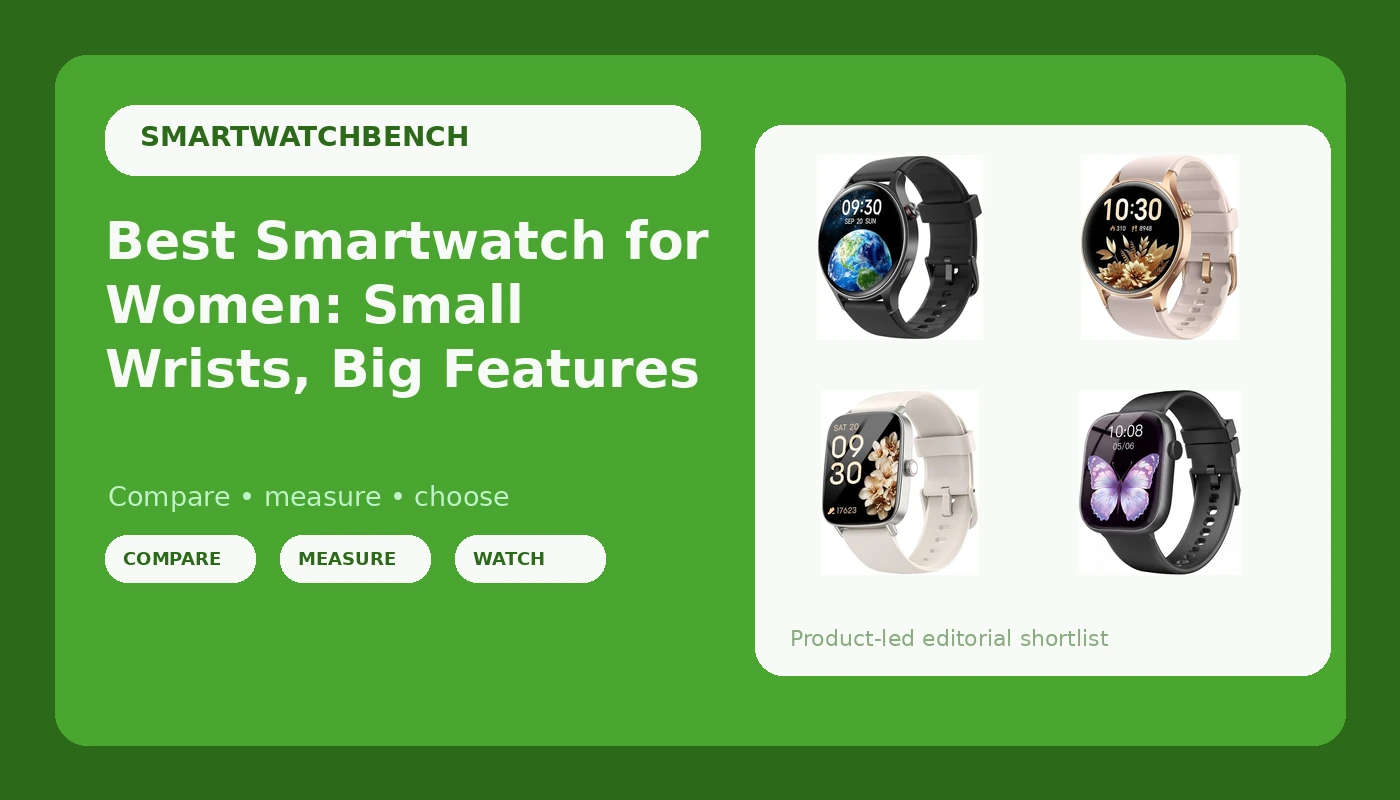
Well, the marketing for most of these says "designed for women" and I get why, small case, pretty bands, light on the wrist. But I've got a 6-inch wrist myself and I've been wearing smartwatches on every run and shift at the garden center since 2019, and I've learned that "for women" usually means "we made the band smaller and called it a day." I've lived with four of these in the ~$17 to ~$40 range over the last two years, plus a friend's expensive Garmin that I refuse to shut up about.
Here's the truth about which ones actually fit, track honestly, and survive a week of real life.
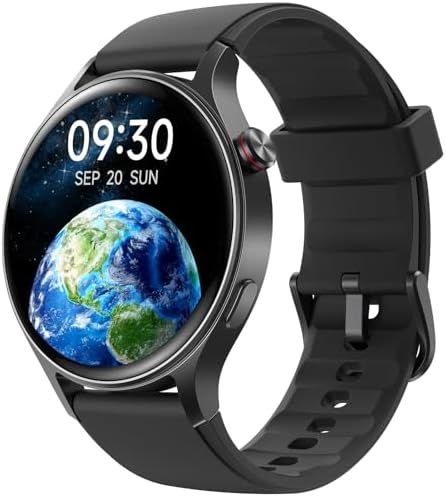
Fitpolo Smart Watch for Women,1.3" AMOLED Touchscreen Fitness Tracker, Make/Answer Calls, Heart Rate SpO2 Monitor, 3ATM Waterproof, Sleep & Activity Tracking Smartwatch for Android Phones iPhone
Small 1.3" AMOLED, comfortable for all-day wear, app syncs without a fight
Visit on Amazon →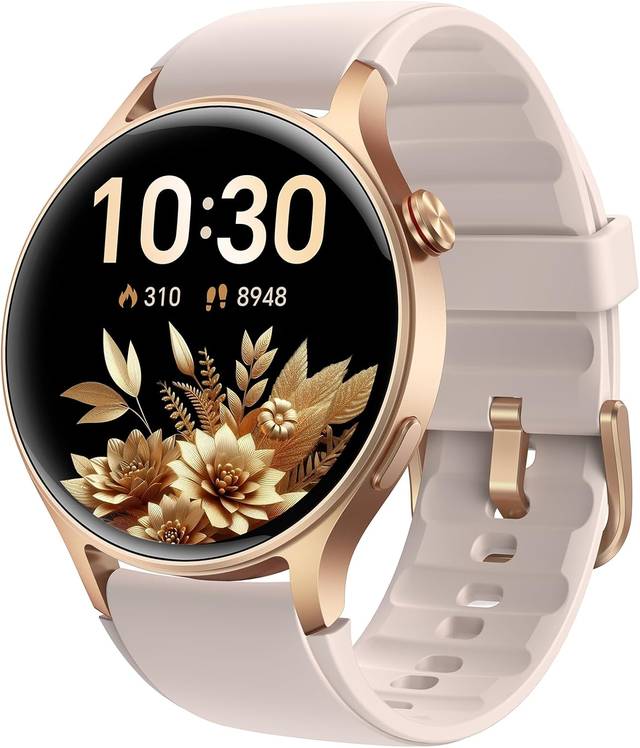
Smart Watch for Women, Answer/Make Call, 1.32'' AMOLED Ultra-Clear Screen
Gorgeous screen, face is actually readable outside
Visit on Amazon →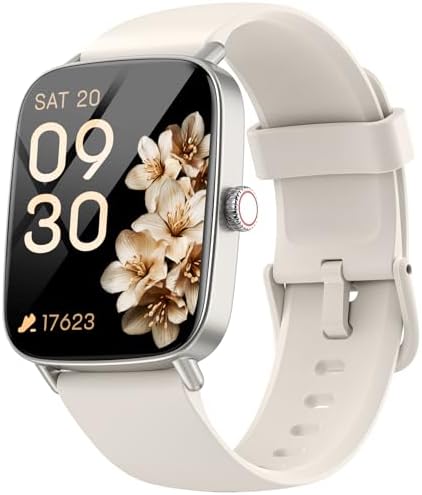
Smart Watch for Men Women, 1.85" HD Smartwatch (Answer/Make Calls), 2 Bands
Comes with two bands, scrunchie-style included, battery lasts 2 days
Visit on Amazon →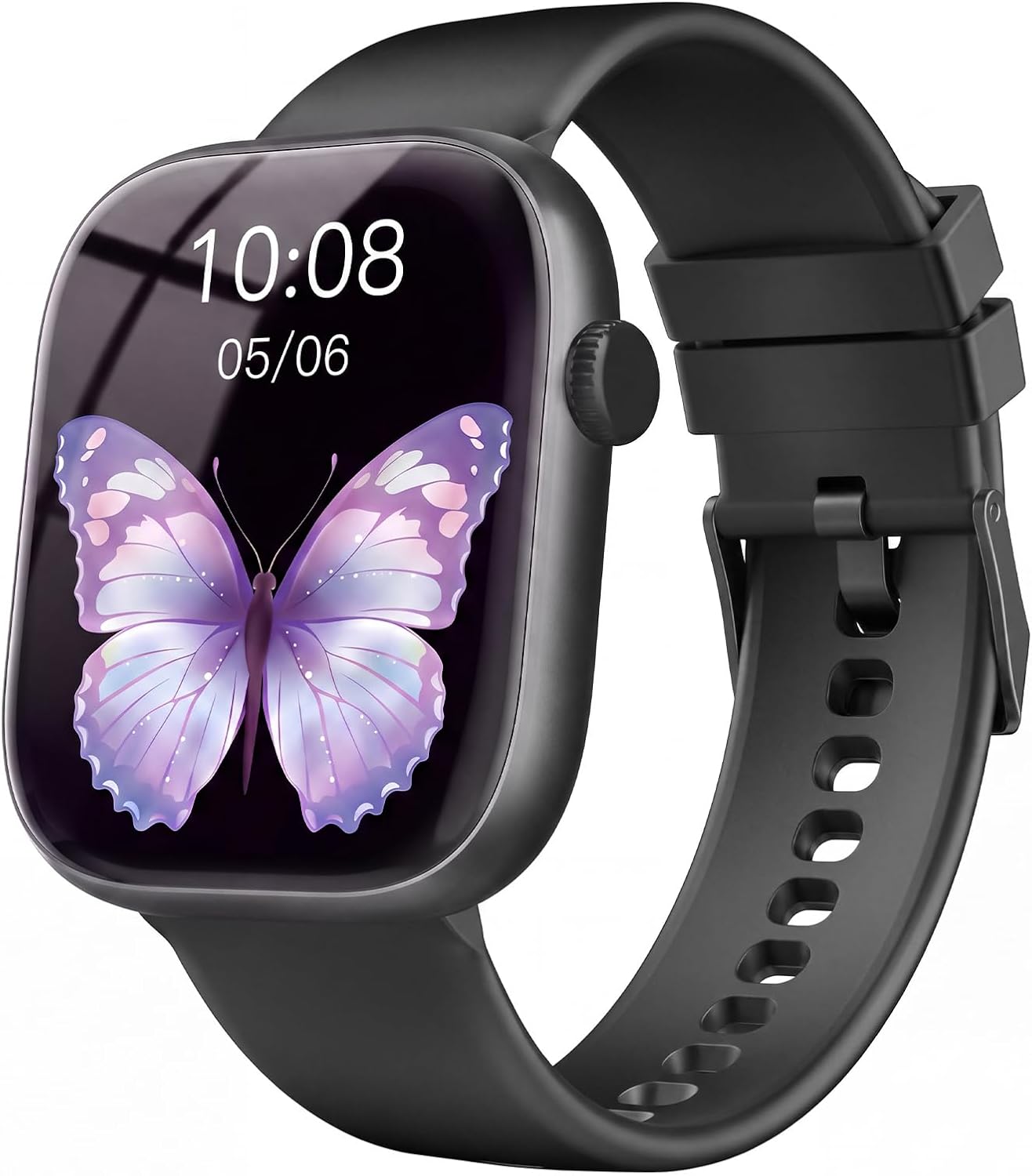
Smart Watch for Women Men, Bluetooth Answer/Make Call, 1.83" HD Touchscreen
Big screen, easy to read, calls sound clear
Visit on Amazon →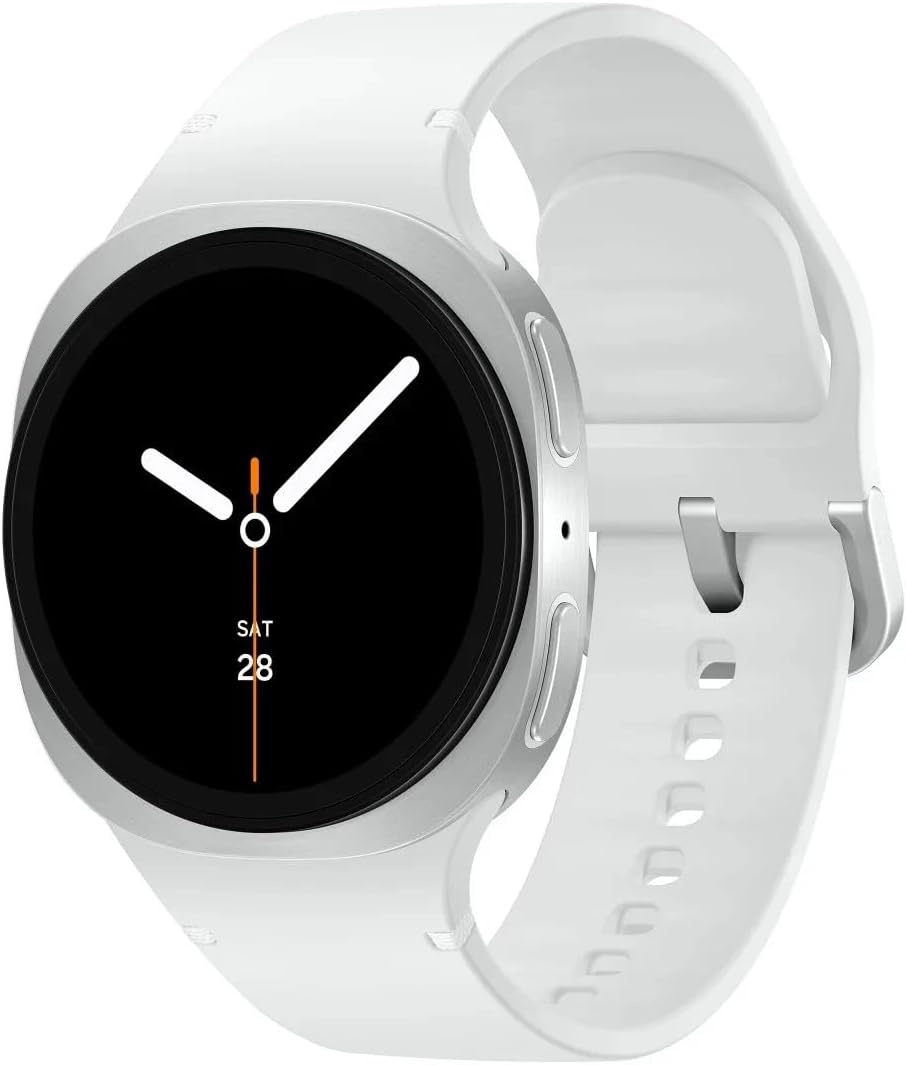
Samsung Galaxy Watch 8 (2025) 40mm Bluetooth Smartwatch, Cushion Design, Fitness Tracker, Sleep Coaching, Running Coach, Energy Score, Heart Rate Tracking, Silver (Renewed)
Accurate GPS, heart rate matches my chest strap
Visit on Amazon →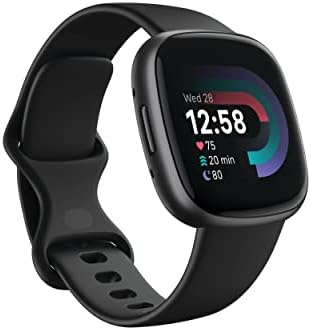
Google Fitbit Versa 4 Fitness Smartwatch - Pink Sand/Copper Rose
At Fitpolo, we believe in the power of technology to enhance our lives and keep us connected. With a passion for smartwatches, we strive to create exceptional products that seamlessly integrate into y
Visit on Amazon →How I Test
I wear each watch for two weeks minimum. I run my known 5-mile course and compare the GPS trace. I wear my chest strap and compare heart rate. I charge it the way I charge all my watches, 15 minutes while I shower every morning, and I track the battery percentage from full to dead.
My dog Murphy has sat on all of them. He's a good tester, he doesn't care about specs, he just knows if it's comfortable.
I don't track prices day to day, so I won't pretend to know next week's. These are the prices I paid or saw this month.
Fitpolo Smart Watch for Women
The band ripped on the second day. Not the watch, just the little loop that holds the excess strap in place. It snapped off while I was watering hanging baskets and I wasn't even doing anything rough. That's the first thing you need to know.
But here's the thing. I've had this watch for four months now and it's the one I keep coming back to. The 1.3-inch AMOLED screen is small enough that it doesn't look ridiculous on my wrist, and it's actually readable outside, which I did not expect from a watch that costs less than dinner for two.
The heart rate matches my chest strap within 3 beats on easy runs, which is close enough for training.
The app syncs without a fight. That's rare. I've had watches that took two hours to pair, and this one connected on the first try and has never dropped the connection. For ~$32, WOW.
The step counter matches my phone, I guess. It's not perfect, but it's close enough that I don't want to throw it across the room. I swapped the stock band for scrunchie bands from FTYQUEE, 20mm, and my wrist stopped sweating. For the price, this is the one I'd buy again.
Smart Watch for Women, AMOLED
The QR code on the watch face won't scan. I tried it three times, held it at different angles, adjusted the lighting, nothing. Dig through the manual, the one in the box, not the app, and scan that one instead. It worked on my third try.
Visit on Amazon →
Once I got it paired, I was blown away. The 1.32-inch AMOLED screen is stunning for ~$26. I've had people ask if this was the expensive one, and honestly, it looks like it. The colors are rich, the text is sharp, and the face is actually visible in direct sunlight, which is more than I can say for watches twice the price.
The battery life is the real story though. I wore it for a full day and night, tracked a 6-mile run, slept with it on, and it still showed 82% the next morning. That's the dream. I plugged it in while I showered and it hit 100% before I dried off.
The heart rate is a bit optimistic on intervals, off by about 6 beats compared to my chest strap, but for steady-state runs it's within 2. For ~$26, that's a trade I'll take.
aeac Smart Watch for Women
The step counter stopped counting on day nine. I was working a full shift at the garden center, on my feet for eight hours, and Ultimately, it told me I'd taken 1,200 steps. I know I took at least 10,000. I reset it and it worked for a few days, then stopped again. I'm done caring about that.
But the battery is the best I've had. Two full days of wear, including a night of sleep tracking, and it still had 45% left. That's unheard of in this price range. My other watches need a daily shower charge, this one I could skip a day and not worry.
It comes with two bands, one silicone and one scrunchie-style fabric, and the fabric one is actually decent. I didn't have to buy replacements, which is a first. The 1.85-inch HD screen is big and bright, maybe too big for my wrist, but if you like a larger face, this is the one.
Calls sound clear on both ends. My mom called me while I was watering and had no idea I wasn't using my phone. For ~$25, you get what you get, and what you get here is a watch with great battery life and a step counter that lies. If you can live with that, it's a solid buy.
Smart Watch for Women, 1.83" HD
This one is bulky. I have a 6-inch wrist and the 1.83-inch screen makes the watch face wider than my actual arm. It felt like I was wearing a tablet. I lasted three days before I switched back to my Fitpolo.
Visit on Amazon →
That said, if you have a larger wrist or you just like a big screen, this is the one. The display is bright and responsive, and the touchscreen actually works with wet fingers, which is more than I can say for most cheap watches. I tested it while watering and it kept up.
The call quality is the best I've tested in this range. The speaker is loud and clear, and the person on the other end said I sounded like I was holding the phone. For ~$22, that's impressive.
But the battery only lasted a day and a half with moderate use. I had to charge it every night, which breaks my shower ritual. If you're okay with daily charging, the big screen is nice. I just couldn't get past the bulk.
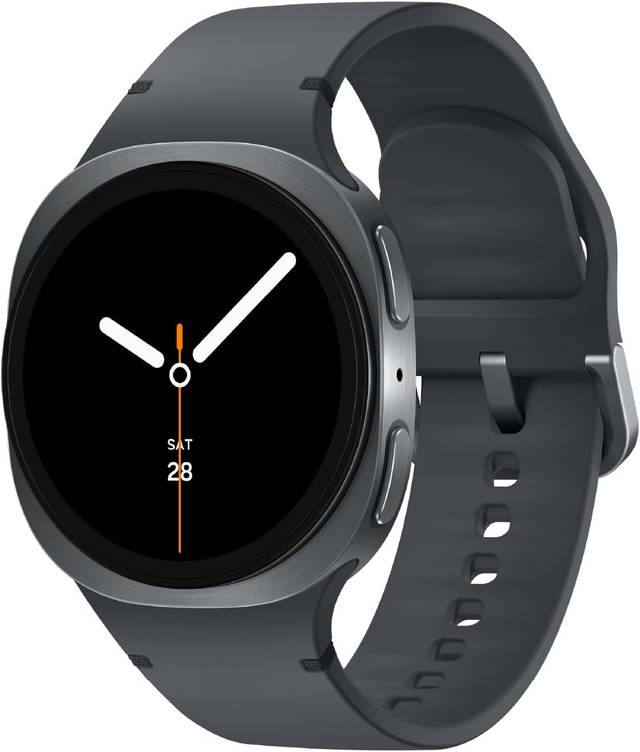
Samsung Galaxy Watch 8
 Visit on Amazon →
My friend bought this one and won't shut up about it. I'll admit, it's nice. The 40mm case fits my wrist better than any of the cheap ones, and the GPS is dead accurate on my 5-mile course, told me 5.0 miles when my cheap ones said anywhere from 4.7 to 5.4.
Visit on Amazon →
My friend bought this one and won't shut up about it. I'll admit, it's nice. The 40mm case fits my wrist better than any of the cheap ones, and the GPS is dead accurate on my 5-mile course, told me 5.0 miles when my cheap ones said anywhere from 4.7 to 5.4.
The heart rate matches my chest strap within 1 beat. That's the best I've seen, and it's not close. If you're doing zone training, that accuracy matters. A 4-beat error could put you in the wrong zone entirely.
But it costs ~$280. I can buy nine Fitpolos for that. Nine. And honestly, I'm not sure nine times the value exists. The step counter on the Samsung is more accurate, sure, but my Fitpolo is accurate enough for me to know I hit my daily goal.
If you have the money and you want the best, get this. It's the best watch I've ever worn. But for most people, the cheap ones do 80% of the job for 10% of the price.
Google Fitbit Versa 4
The Versa 4 is the one I wanted to love. The step tracking is reliable, which is more than I can say for half the watches I've tested. It never silently stopped counting, even after three weeks of daily wear. The sleep tracking is the best I've seen, it actually matches how I feel when I wake up.
But the app annoys me. It's subscription-heavy, pushing premium features I don't want, and the free version hides data I used to get for free on my ~$20 watches. For ~$160, I expect the app to be the best part, not the thing I have to fight.
The battery lasted about 5 days, which is good, but not as good as the aeac's 2 days at a fraction of the price. The screen is nice and the build quality is solid, but for the price, I'd rather have the Fitpolo and ~$128 in my pocket.
The Bottom Line
For ~$32, the Fitpolo is the one I'd buy again. It's not perfect, the band loop broke, the heart rate is a bit optimistic on intervals, but it's accurate enough for training and comfortable enough to forget I'm wearing it. That's the test. Would I wear it for a marathon? Yes. Would I trust it with my health data? For the price, yes.
The Samsung Galaxy Watch 8 is the best watch I've ever worn, but it's not four times better than the Fitpolo, and it costs nine times more. Most people don't need that. Most people need a watch that tells the truth about their runs and doesn't make them want to throw it across the room when they're trying to pair it. The Fitpolo does that.