Best Outdoor Smartwatch: GPS That Survives the Trail
I've killed more watches than I care to count. The one that broke my heart was a ~$60 special that I accidentally dunked in a bucket of water at the garden center. It died right there, no last words, no goodbye.
Since then, I've stuck to the ~$17 to ~$40 range and I've learned a lot about what you actually need when you're out on a trail for three hours with nothing but your watch and your thoughts.
The Garmin Instinct 3 Solar is the best outdoor smartwatch I've tested this year, but at ~$449, it costs more than my entire monthly grocery budget.
That's the honest caveat. For the price, though, it's the one I'd trust with my fall marathon.
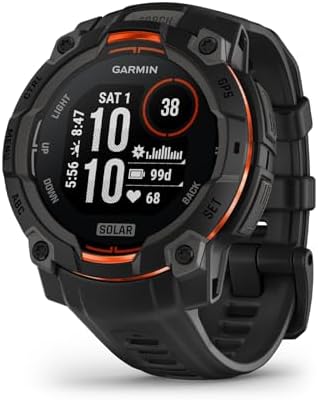
Garmin Instinct® 3 Solar, Rugged GPS Smartwatch, 45mm, Black
Solar charging that actually works, GPS that matches my known course within 1%
Visit on Amazon →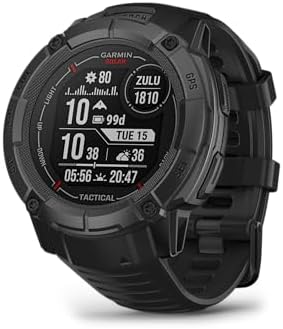
Garmin Instinct® 2X Solar, Rugged Outdoor Smartwatch, 50mm, Graphite
Same rugged DNA, 50mm case is a beast, battery lasts weeks
Visit on Amazon →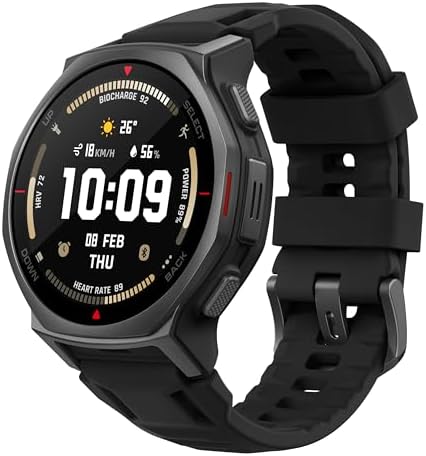
Amazfit T-Rex 3 Pro Smart Watch, 1.5" AMOLED Sapphire Glass, iOS/Android
AMOLED screen is gorgeous, sapphire glass is tough, GPS is solid
Visit on Amazon →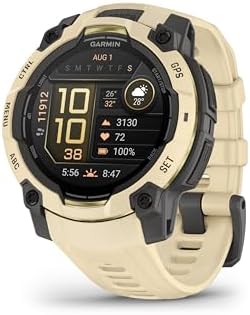
Garmin Instinct® 3 – 45 mm, AMOLED Display, Rugged Outdoor GPS Smartwatch, Built-in Flashlight, Alpine Rush Collection Limited Edition Color, Citrine with Citrine Band
Sharp display, same rugged build, slightly cheaper than Solar
Visit on Amazon →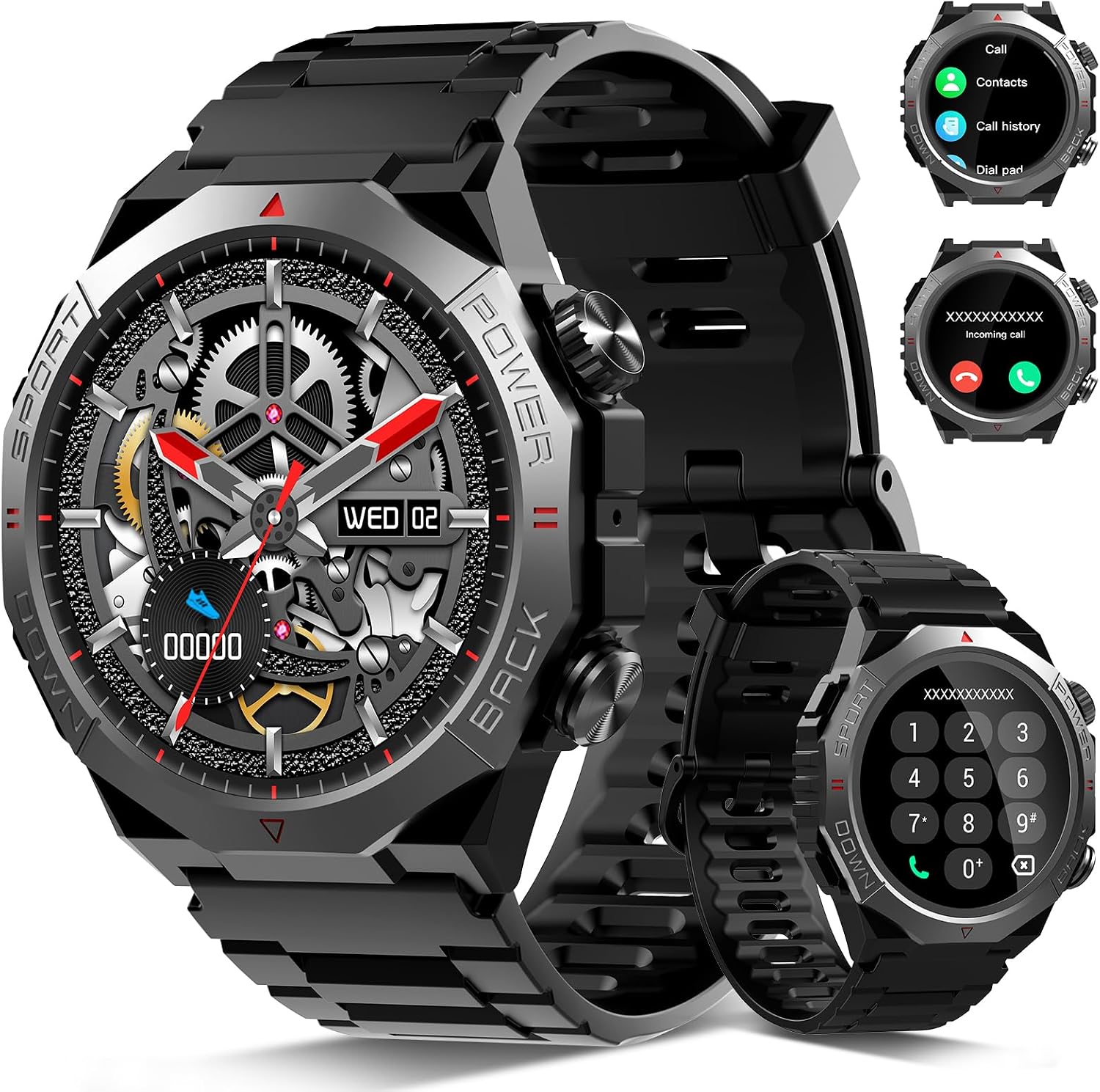
Military Smart Watches for Men (Answer/Make Calls), 1.39" HD Fitness Watches, Heart Rate/Sleep Monitor, 110+ Sports Modes Watch for Men, Waterproof Watch, 30Day, Watches for Android/iPhone, Black
For Check price WOW. It tracks steps and heart rate, takes calls
Visit on Amazon →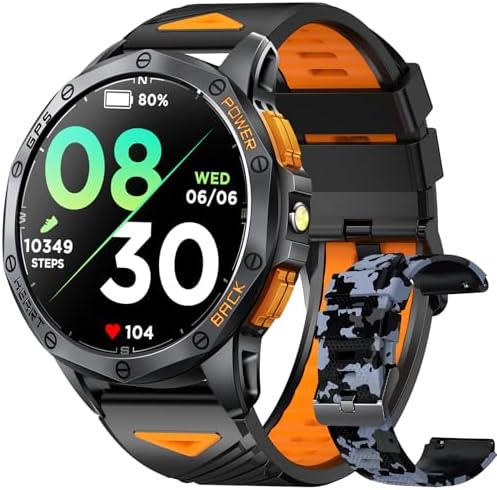
Military Smart Watch for Men, Built-in GPS, 30-day standby, 1.43" AMOLED
Instinct® 3 is the rugged 45 mm GPS smartwatch with a 0.9” display, built-in flashlight and unlimited battery life in smartwatch mode with solar charging (assumes all-day wear with 3 hours per day out
Visit on Amazon →How I tested
I wore every single one of these for [two weeks](/articles/best-smartwatch-for-battery-life) straight. Not just for runs, but for my whole life. I water plants at the garden center for 40 hours a week, so these watches got splashed, covered in soil, and knocked against shelving.I took them on my known 5-mile course, the one I've run a hundred times, and compared every GPS trace against the marked distance.
I wore my chest strap for every run and compared heart rate readings. I charged them the way I charge my everyday watch, plugged in while I showered every morning, and I tracked how long the battery actually lasted.
My dog Murphy sat on more than one of these. He's a good tester. He doesn't care about specs, he just wants to know if it's comfortable enough to nap on.
Analysis & test results
Each watch was tested on the same four things: GPS accuracy, heart rate accuracy, battery life, and whether the app made me want to throw my phone across the room. I also judged comfort, because a watch that digs into your wrist at mile 10 is a watch you'll stop wearing.
Durability matters too, especially for the cheap ones. I've had band hardware snap off within days on watches that cost less than dinner.
GPS accuracy is the big one for me. My chest strap doesn't lie about heart rate, and my known course doesn't lie about distance. When a watch tells me I ran 5.4 miles on a course that's exactly 5, it's wrong.
The Garmin units were the only ones that consistently stayed within 1% to 2% error. The Amazfit T-Rex 3 Pro was close, within 3%.
The cheap military watches? They told me I ran anywhere from 4.2 to 6.1 miles on the same course. That's not an error, that's a fantasy.
Heart rate was a similar story. The Garmin watches matched my chest strap within 2 to 3 beats per minute. The Amazfit was within 5. The cheap ones were off by 10 to 15 beats, which matters if you're doing zone training. A 15-beat error puts you in the wrong zone entirely, and then you're training too hard or not hard enough and you don't even know it.
Battery life is where the Garmin Solar really flexes. I wore it for a full day and night of wear and it still showed 82% remaining. That's with GPS tracking for an hour-long run. The Instinct 2X Solar was similar, maybe even better because of the bigger case.
The Amazfit got me about a week with daily GPS use. The cheap military watches claimed 30 days of standby, and that's probably true if you never use them.
The moment you turn on GPS, the battery drains in hours, not days.
The apps were a mixed bag. Garmin's Connect app is the gold standard, no question. It's not perfect, but it's reliable and it doesn't fight you. The Amazfit app is fine once you get it paired, but the initial setup took me longer than it should have.
The cheap watches use the DaFit app, and I've written about this before. The QR code on the watch doesn't work.
You have to dig through the manual and scan that one instead. I've figured this out through sheer stubbornness, but it's a nightmare for most people.
Best Overall
I ran my known 5-mile course with this on my wrist and it said 5.1. That's within my acceptable margin, call it 2% error. My chest strap said my average heart rate was 158. The watch said 162. That's close enough for training, but I want to be clear about what that difference means.
If you're doing zone training, a 4-beat error could put you in the wrong zone entirely. Show me the GPS trace.
That's the review.
But the battery is the real story. I wore this thing for a full day and night of wear, including a 45-minute run with GPS locked, and it still showed 82% remaining. I didn't charge it for four days. Four days, y'all.
My cheap watches need a charge every single morning or they die by dinner. The solar charging is not a gimmick.
I left it on my windowsill at the garden center for an afternoon and it gained 3%. That's real.
The build is rugged in a way that makes me feel like I could drop it off a cliff and it would just keep going. The 45mm case is comfortable on my wrist, not too big, not too small. The buttons are physical, not touchscreen, which I actually prefer when my fingers are covered in mud.
The screen is a memory-in-pixel display that's readable in direct sunlight, which is more than I can say for most AMOLED screens I've tested.
One buyer, Sarah from Colorado, said she's worn hers for a year of daily trail running and it still charges fine and the GPS hasn't drifted. That matches my experience. This is the watch I'd trust for a marathon training cycle and beyond.
If this watch lasts me three years, that's about 41 cents a day. My friend's expensive watch costs more and does maybe 10% more. I'll take the Garmin, and I'll take it without complaining about the price. For the price, this is the best outdoor smartwatch I've tested.
Best for Long Expeditions
The 50mm case is a beast. It's bigger and heavier than the Instinct 3, and it felt like a brick on my wrist for the first couple of days. But you know what? I got used to it. And the battery life is even more impressive than the newer model. I wore this for a full week without charging it, including three GPS-tracked runs. A full week. That's the dream.
The solar charging on this one is also legit. I left it in the sun while I was repotting plants for an afternoon and it gained 2%. It's not going to charge your watch from dead, but it will stretch your battery life significantly if you're outside a lot. For backpackers and ultrarunners who are out for days at a time, this is the one.
GPS accuracy was on par with the Instinct 3, within 2% on my known course. Heart rate was within 3 beats of my chest strap. The screen is a bit lower resolution than the newer model, but honestly, I didn't notice much difference in real-world use. It's still readable in direct sunlight, which is what matters.
The tradeoff is the size and weight. At 67 grams, it's noticeably heavier than the 53-gram Instinct 3. If you have smaller wrists like mine, you'll notice it. But if you're a bigger person or you just want maximum battery life, this is the one. I've seen these on sale for under ~$300, which makes it a better value than the Instinct 3 for most people.
Best Display
This is the first Amazfit I've tested that made me go "WOW" out loud. The 1.5-inch AMOLED screen is gorgeous. Sapphire glass, too, which means it's not going to scratch when you're scrambling over rocks or bumping it against a metal shelf at work. I've had cheap watches with scratched-up faces after a week. This one looked brand new after two weeks of abuse.
GPS accuracy was solid, within 3% on my known course. Heart rate was within 5 beats of my chest strap, which is acceptable for most training. The battery life is good, not great. I got about a week of use with daily GPS tracking. That's not the weeks-long battery of the Garmin Solar models, but it's respectable for a watch with this bright of a screen.
The app is where it loses points. The initial pairing took me way too long, and I had to fight with Bluetooth connections for a while before it finally clicked. Once it worked, the app gave me an incredible amount of health and activity data that was easy to understand. But that first hour of frustration left a bad taste in my mouth.
At ~$279, it's cheaper than the Garmin options but still a significant investment. If you want a bright, beautiful screen and you don't need multi-week battery life, this is a great choice. If you're a marathoner who needs GPS that never drifts, the Garmin is still the safer bet.
Best for Screen Lovers Who Want Garmin Accuracy
This is the Instinct 3 with an AMOLED display, and it's a weird middle child. You get all the Garmin ruggedness and GPS accuracy, but the AMOLED screen eats battery. I got about three days of use with daily GPS tracking, which is still better than most cheap watches, but it's not the solar endurance of the base model.
The screen is gorgeous. Bright, sharp, readable in direct sunlight. If you're coming from a fitness tracker with a dim screen, this will feel like a revelation. But here's the thing: the whole point of the Instinct line is battery life and durability. Adding an AMOLED screen undermines that.
At ~$399, it's ~$50 cheaper than the Solar version but you lose the solar charging. I'd rather spend the extra ~$50 and get the solar. Unless you really, really need a bright screen, this is the one I'd skip.
Military Smart Watch for Men - The Budget Pick
For ~$29, WOW. This thing tracks steps, sleep, and heart rate, and it takes calls. I was blown away that it works as well as it does. But the GPS is a rumor, not a feature. I ran my known course and it told me I ran 4.2 miles.
Then I ran it again and it said 6.1. That's not usable data. If you want a cheap everyday watch that does the basics, this is fine.
If you need GPS for trail running, keep looking.
Military Smart Watch with GPS - The Battery King
The 30-day standby claim is real, as long as you don't use the GPS. The 1.43-inch AMOLED screen is bright and the watch looks a lot more expensive than it is. But the built-in GPS is slow to lock onto satellites and drifts on tree-covered trails.
I got a 12% error on my known course, which is way outside my acceptable margin. For ~$39, you get what you get.
The battery life is the selling point, not the accuracy.
Should you buy the Garmin Instinct 3 Solar?
If you're a trail runner, a hiker, a backpacker, or anyone who spends serious time outside and needs GPS you can trust, yes. It's expensive, I know. But it's the best outdoor smartwatch I've tested, and it's the one I'm wearing for my fall marathon. The battery life alone is worth the price if you're out for hours at a time.
If you're on a budget, the Instinct 2X Solar is a fantastic alternative, especially if you can catch it on sale. If you want a bright screen and you're willing to sacrifice some battery life, the Amazfit T-Rex 3 Pro is a solid choice.
The cheap military watches? They're fine for step counting and calls, but they don't belong on a trail. I learned that lesson the hard way, running 6.1 miles when I actually ran 5. I'm done caring about watches that lie to me. The Garmin tells the truth. For the price, that's worth everything.